Summary
This incident did not start with a security review. It started with a resignation.
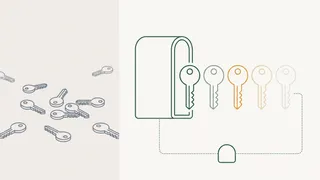
A senior engineer gave notice, and someone asked the reasonable question of what they could still log into after their last day. Disabling the SSO account was easy. Answering the rest took nine days, because the honest answer was that we did not know. Database passwords lived in environment variables. A few lived in Parameter Store. One lived in a CI variable that predated the current CI system. At least two lived in a Kubernetes Secret that had been committed to a repository, force-pushed away, and then quietly re-added because a deploy broke without it.
Impact
No breach, which is why this is a sev3 and not a career event. The impact was what the nine days revealed:
- No inventory. “What does this person have access to” could not be answered without grepping every repo and asking three teams.
- No expiry. A credential leaked in 2023 was still valid in 2026. Nothing about the system noticed or cared.
- No attribution. The database saw one user called
api_proddoing everything. Forty pods shared it, so a bad query had forty suspects. - Rotation meant an outage. Changing a password meant editing a manifest and doing a rolling restart, in the right order, at the same time. We rotated roughly never.
Timeline
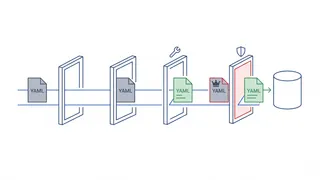
No day-by-day clock for the nine days; the question was asked, three teams were involved, and the answer arrived nine days later. The migration that followed has a full phase timeline in the case study: inventory, shadow, dual-read, dynamic-only, eleven weeks end to end.
One near-miss from the shadow phase deserves its own line. A daily diff across every migrated pod found exactly one mismatch in 214 pods: the app started faster than the Vault sidecar agent, so the pod read an empty file at second zero and the env var won. That race is normal, and we would have shipped the crash it caused straight into production had we skipped the shadow phase.
Root cause
Rotation was risky because of the deployment design, not because anyone was careless: because rotation meant an outage, we avoided it, and because we avoided it, every credential had years of exposure behind it. The scattering across four homes was accumulation with no inventory to push back against it.
Contributing factors
The committed Secret came back. It was removed properly, by force-push, and then quietly re-added because a deploy broke without it. Deletion that breaks something gets reverted; that is why deletion needs a plan and not just a push.
One shared database user. api_prod doing everything meant access
questions could not be answered per workload even in principle.
What changed
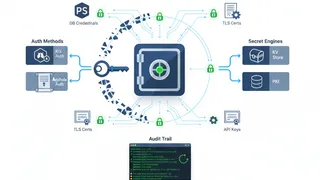
The full migration is the case study: everything to Vault, dynamic database credentials per pod, and audit as a first-class output.
- Credential lifetimes with a ceiling. Indefinite before; 8h dynamic credentials with a 24h ceiling after. The initial one-hour TTL was revised: it generated enough renewal traffic to make the audit log hard to read and turned every restart storm into a small load test.
- One database user per pod, measured via
pg_stat_activitysampling, from one shared user per service. - Static secrets in Git: 14 to 0, by a gitleaks scan of the full history at week 11.
Did it hold
We tested this against a real departure in week nine and had a complete answer in under a minute, against nine days for the same question in January. The accepted trade-off is now explicit: once a pod cannot start without Vault, Vault’s availability is your availability, so Vault runs three nodes across zones with Raft, auto-unseal, and quarterly unseal tests.
What I would do differently
Treat “we cannot answer who has access to what” as an incident before a resignation makes it one. The nine days were not a bad week; they were the first time anyone had asked the system a question it was never able to answer.
The full migration, including the shadow-phase race and the tier-zero trade-off, is written up in A Secrets Migration to Vault.