Node.js Developer Beginner to Expert
A roadmap for learning Node.js: the runtime and event loop, building APIs, databases, streams, testing, security, and production deployment.
Node.js Developer Beginner to Expert
This roadmap takes you from JavaScript foundations and the event loop through building APIs, working with databases, streams, testing, and security, and on to running Node in production. Go in order, build something small at each stage, and treat the optional topics as branches to explore once the required ones feel solid.
JavaScript Foundations
Modern JavaScript
Learn ES modules, closures, promises, async/await, destructuring, and array methods. Most Node confusion is really async-JavaScript confusion.
TypeScript (recommended)
Learn enough TypeScript to type functions, objects, and async code. Most serious Node codebases use it.
The Node Runtime and Event Loop
The event loop
Understand how Node handles I/O with a single-threaded event loop, the phases, and the difference between the microtask and macrotask queues.
Blocking vs non-blocking
Learn why CPU-heavy work blocks the loop and starves every other request, and what to do about it.
Globals and process
Get comfortable with process.env, argv, exit codes, and the module system (CommonJS vs ESM).
Modules and npm
package.json and semver
Understand dependencies vs devDependencies, semantic version ranges, and lockfiles for reproducible installs.
CommonJS vs ES Modules
Know the difference between require and import, and how the package type field and file extensions affect module resolution.
Publishing and scripts
Learn npm scripts and the basics of publishing a package.
Core Built-in Modules
fs, path, os
Read and write files (sync vs async vs promises), build cross-platform paths, and query the system.
http and events
Create a raw HTTP server and understand the EventEmitter pattern that Node is built on.
Building HTTP APIs
A framework (Express or Fastify)
Learn routing, middleware, and request/response handling. Fastify adds schema validation and speed; Express is the ubiquitous default.
REST design
Design clean resources, status codes, and error responses, and validate input at the boundary.
Authentication
Implement sessions or JWTs, hash passwords properly (bcrypt/argon2), and protect routes.
Databases
SQL with an ORM/query builder
Use Prisma, Drizzle, or Knex against PostgreSQL, and understand connection pooling.
Migrations
Version your schema so changes apply consistently across environments.
NoSQL and caching
Know when a document store (MongoDB) or a cache (Redis) fits, and how to use them from Node.
Asynchronous Patterns and Streams
Streams and backpressure
Read and write large data with streams instead of buffering it all in memory, and understand backpressure.
Error handling
Handle rejected promises, uncaught exceptions, and graceful shutdown so one error does not crash or hang the process.
Testing
Unit and integration tests
Write tests with the built-in node:test runner, Vitest, or Jest, and test your API against a real test database.
Mocking and coverage
Mock external services, and use coverage to find untested paths without chasing 100%.
Security
Common vulnerabilities
Guard against injection, validate and sanitize input, set security headers (helmet), and manage secrets outside the code.
Dependency hygiene
Audit dependencies (npm audit), pin versions, and keep the supply chain in mind.
Observability
Structured logging
Emit JSON logs with a logger like pino, and include request context.
Metrics and tracing
Expose metrics and add distributed tracing with OpenTelemetry for real visibility.
Configuration and Tooling
Config and environment
Load and validate configuration from the environment (never hardcode secrets), and fail fast on missing values.
Linting and formatting
Set up ESLint and Prettier so style is automatic, not argued about.
Production and Deployment
Containerizing Node
Write a small, multi-stage Dockerfile, run as a non-root user, and handle signals for graceful shutdown.
Scaling with clustering
Use the cluster module or a process manager (PM2) or container orchestrator to use all CPU cores and stay up across restarts.
Performance profiling
Profile CPU and memory, find event-loop lag, and fix the real bottleneck rather than guessing.
Beyond the Basics
Real-time (WebSockets)
Add real-time features with ws or Socket.IO, and understand the scaling implications.
Meta-frameworks and monorepos
Explore NestJS for structure, or a monorepo setup for sharing code across services.
Comments
Was this useful?
Continue on this topic
The same subject, covered a different way from the roadmap above.
 Code snippet
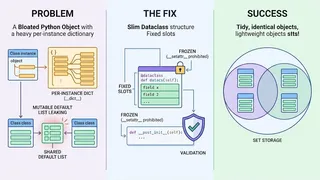
Python Dataclass Patterns: Slots, Frozen Instances, and Field Validation
A Python snippet exploring advanced dataclass patterns for production code. Covers `__slots__` with dataclasses, frozen immutable instances, `__post_init__` validation, field factories, and comparison with Pydantic for data modeling.
 Article
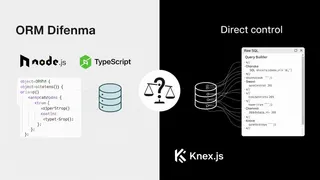
The ORM Dilemma: To Use or Not to Use
A look at Object-Relational Mapping (ORM) in Node.js, TypeScript, and Express: the real pros and cons, and when and why to consider alternatives to ORM for your database operations.
 Quiz
QuizNode.js & Express Fundamentals: Building Server Applications
Master Node.js and Express basics: server creation, routing, middleware, request/response handling, error handling, and REST API development.
 Flashcards
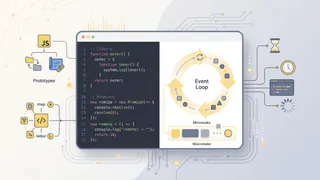
JavaScript Intermediate Flashcards
Intermediate and advanced JavaScript concepts for deeper mastery using spaced repetition.
You might also enjoy
More posts on similar topics
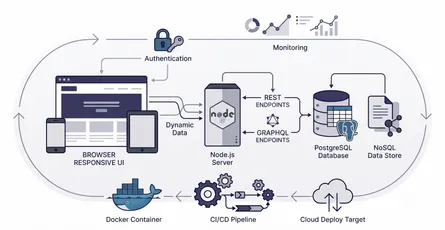
Full-Stack Developer Beginner to Expert
Full-Stack Developer Beginner to Expert This roadmap walks you from your first web page to shipping and operating a complete production application. Work the stages in order. Build the frontend fun
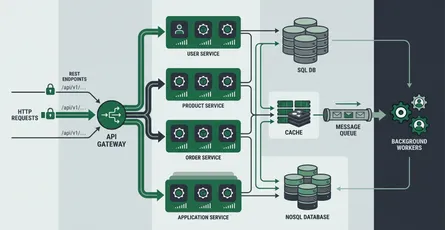
Backend Developer Beginner to Expert
Backend Developer Beginner to Expert This roadmap walks you from your first server-side program to designing scalable, secure systems. Work through the stages in order. Nail a language, the command
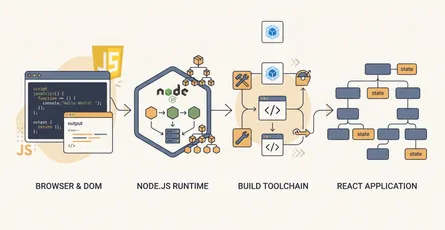
JavaScript Beginner to Expert
This roadmap guides you through the complete JavaScript journey from writing your first variable to architecting production-grade applications on the frontend and backend. Work through each stage sequ
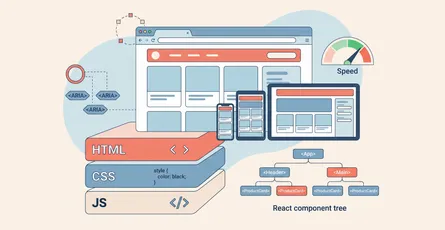
Frontend Developer Beginner to Expert
Frontend Developer Beginner to Expert This roadmap walks you from absolute beginner to a strong, hireable frontend engineer. Work through the stages in order. The early ones build the mental model
React Developer Beginner to Expert
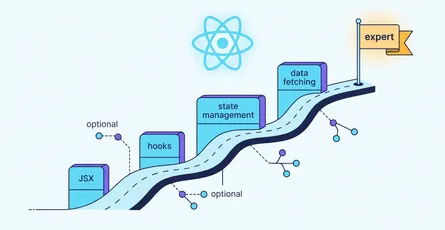
React Developer Beginner to Expert This roadmap takes you from JavaScript prerequisites through JSX, hooks, and state management, and on to data fetching, meta-frameworks, performance, and testing.
Release Engineer Beginner to Expert
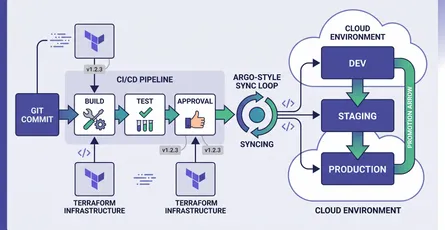
This roadmap takes you from release engineering principles and version control mastery through to advanced GitOps patterns and multi-account AWS delivery at scale. Each stage builds on the last. Treat
6 related posts