Backend Developer Beginner to Expert
A roadmap for learning backend development, from a programming language and APIs to databases, caching, message queues, security, and scalable architectures.
Backend Developer Beginner to Expert
This roadmap walks you from your first server-side program to designing scalable, secure systems. Work through the stages in order. Nail a language, the command line, and databases first, then layer on APIs, authentication, caching, and messaging, and finish with the deployment, observability, and scaling skills that separate a hobby project from production. Treat required topics as your backbone, pick up recommended ones as you go, and save the optional ones for when a real problem asks for them.
Choose a Backend Language
Language Fundamentals
Variables, control flow, functions, error handling, and the type system of one language you commit to first.
Node.js, Python, Go, or Java
Compare the four most common backend languages and their ecosystems, then go deep on one instead of skimming all.
Package Management
Install, pin, and audit dependencies with npm, pip, Go modules, or Maven so builds stay reproducible.
Async and Concurrency Basics
How your language handles non-blocking I/O, threads, or goroutines, since backends live or die on concurrency.
Operating System and Command Line
Shell and Core Utilities
Move around the filesystem, pipe commands, edit files, and chain grep, sed, and awk to inspect logs and data.
Processes, Signals, and Ports
How the OS schedules processes, why signals matter for graceful shutdown, and how apps bind to ports.
Permissions and the Filesystem
Users, groups, file permissions, and environment variables that decide what your service can and cannot do.
Version Control with Git
Git Fundamentals
Commits, branches, merges, and rebases, plus resolving the conflicts that inevitably show up.
Branching and Pull Requests
Feature branches, code review, and a workflow like trunk-based or GitHub Flow that fits your team.
Tags and Semantic Versioning
Mark releases with tags and communicate change scope through major, minor, and patch versions.
How the Web Works
HTTP and HTTPS
Methods, status codes, headers, cookies, and how TLS secures the connection your API rides on.
Client-Server Model and DNS
How a request travels from browser to server through DNS resolution, load balancers, and reverse proxies.
Request Lifecycle
Parsing, routing, middleware, handler, and response, so you know exactly where your code fits.
Relational Databases and SQL
SQL Query Language
SELECT, JOIN, GROUP BY, subqueries, and aggregation to read and shape data from many tables.
Schema Design and Normalization
Model entities and relationships, apply normal forms, and know when denormalizing is the right call.
Indexes and Query Plans
How indexes speed reads, when they hurt writes, and how to read an EXPLAIN plan to fix slow queries.
Transactions and ACID
Atomicity, isolation levels, and locking so concurrent writes stay correct under load.
NoSQL Databases
Document Stores
Schema-flexible JSON documents in stores like MongoDB, and the modeling tradeoffs versus relational tables.
Key-Value and Wide-Column
Redis for key-value speed and Cassandra-style wide-column stores for write-heavy, partitioned data.
Choosing SQL vs NoSQL
Match access patterns, consistency needs, and scale to the right data store instead of following hype.
Building RESTful APIs
Resources, Verbs, and Status Codes
Model nouns as resources, map CRUD to HTTP methods, and return the status codes clients expect.
A Web Framework
Express, Fastify, FastAPI, Gin, or Spring to handle routing, middleware, and request parsing for you.
Pagination, Filtering, and Versioning
Keep large collections usable and evolve endpoints without breaking existing consumers.
API Documentation with OpenAPI
Describe endpoints in an OpenAPI spec so clients, tests, and docs stay in sync with reality.
GraphQL and gRPC APIs
GraphQL Schemas and Resolvers
Let clients ask for exactly the fields they need, and understand the N+1 problem you must solve.
gRPC and Protocol Buffers
Strongly typed, high-performance RPC over HTTP/2 for internal service-to-service communication.
Choosing an API Style
Weigh REST, GraphQL, and gRPC against your clients, latency budget, and team familiarity.
Authentication and Authorization
Sessions vs Tokens
Cookie-based sessions versus stateless JWTs, and the tradeoffs each makes for scale and revocation.
OAuth2 and OpenID Connect
Delegate identity to providers and understand the authorization code flow behind social login.
Password Storage and Hashing
Salt and hash with bcrypt or argon2, and never store or log credentials in plaintext.
Role and Attribute-Based Access
Model permissions with RBAC or ABAC so authorization scales past a single admin flag.
ORMs, Query Builders, and Migrations
ORMs and Query Builders
Prisma, SQLAlchemy, GORM, or Hibernate map rows to objects, but know when raw SQL is clearer.
Database Migrations
Version schema changes in code so every environment applies the same ordered, reversible steps.
Connection Pooling
Reuse database connections to avoid exhausting the server under concurrent request load.
Caching Strategies
Application and In-Memory Caching
Cache expensive computations and hot reads in process or in Redis to cut latency and database load.
Cache Invalidation and TTLs
TTLs, write-through, and cache-aside patterns to stop serving data that has quietly gone stale.
CDN and HTTP Caching
Use cache-control headers and a CDN to serve static and cacheable responses from the edge.
Message Queues and Event-Driven Architecture
Queues and Background Jobs
Offload email, image processing, and reports to workers pulling from a queue like RabbitMQ or SQS.
Event Streaming with Kafka
Publish events to durable, replayable logs so many consumers can react without tight coupling.
Delivery Guarantees and Idempotency
At-least-once delivery means duplicates happen, so make consumers idempotent to stay correct.
API Security
OWASP Top 10
Injection, broken access control, and the other most common web vulnerabilities you must design against.
Input Validation and Sanitization
Validate and sanitize every input at the boundary to block injection and malformed data.
Rate Limiting and Throttling
Protect endpoints from abuse and runaway clients with per-user and per-IP limits.
Secrets and Transport Security
Keep keys out of source control, rotate them, and enforce TLS everywhere in transit.
Testing and Quality
Unit Tests
Test pure functions and business logic in isolation for fast, reliable feedback on every change.
Integration Tests
Exercise your code against a real database and dependencies to catch wiring bugs unit tests miss.
Contract and End-to-End Tests
Verify that services honor their API contracts and that critical flows work across the whole stack.
Containerization and Deployment
Docker Fundamentals
Write Dockerfiles, build small images, and run your backend in a container identical across environments.
CI/CD Pipelines
Automate build, test, and deploy so every merge reaches production through a repeatable pipeline.
Configuration and Environments
Drive config through environment variables and keep dev, staging, and prod cleanly separated.
Observability
Structured Logging
Emit machine-parseable logs with correlation IDs so you can trace one request across services.
Metrics and Dashboards
Track latency, error rate, and throughput with Prometheus and Grafana to spot trouble early.
Distributed Tracing
Follow a request through many services with OpenTelemetry to find the slow hop in a call chain.
Scaling, Load Balancing, and Microservices
Horizontal Scaling and Load Balancing
Run stateless instances behind a load balancer so you can add capacity by adding machines.
Database Scaling
Read replicas, sharding, and partitioning to push the database past a single-node ceiling.
Microservices and Boundaries
Split services along business capabilities, and respect the operational cost that distribution adds.
Resilience Patterns
Timeouts, retries with backoff, and circuit breakers so one failing dependency does not take everything down.
Comments
Was this useful?
Continue on this topic
The same subject, covered a different way from the roadmap above.
 Quiz
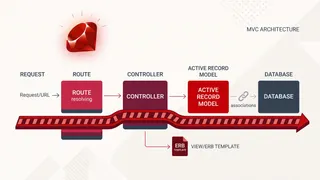
QuizRuby on Rails: Convention Over Configuration
Test your knowledge of Ruby on Rails: MVC, Active Record and associations, migrations, routing, controllers and callbacks, ERB views, and the conventions that make Rails productive.
- Cheatsheet
GitHub Actions
The workflow YAML you write over and over. Triggers, jobs and steps, secrets, matrix builds, caching, artifacts, and reusable workflows in one reference.
 Dev tip
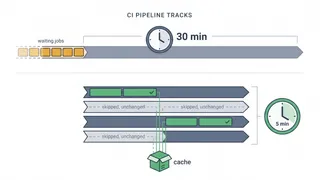
Speeding Up CI Pipelines: Caching, Parallelism, and Skipping Unnecessary Work
Practical tips for cutting CI/CD pipeline time. Covers dependency cache keys that actually hit, test sharding and job parallelism, path-based change detection to skip unchanged services, artifact reuse between jobs, and how to find your real bottleneck before optimising.
 Glossary
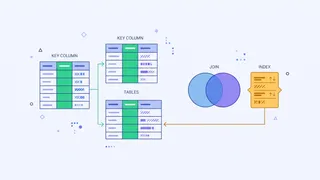
Databases & SQL
Foundational relational database and SQL terms: tables and keys, the join types, indexes and query plans, transactions and isolation levels, normalization, and the managed-service vocabulary you meet in the cloud.
You might also enjoy
More posts on similar topics
Full-Stack Developer Beginner to Expert
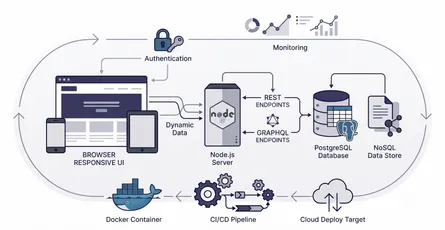
Full-Stack Developer Beginner to Expert This roadmap walks you from your first web page to shipping and operating a complete production application. Work the stages in order. Build the frontend fun
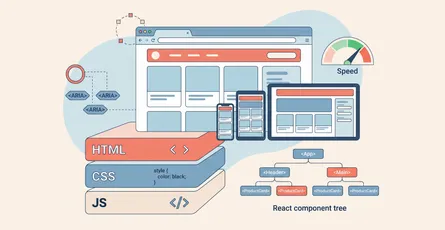
Frontend Developer Beginner to Expert
Frontend Developer Beginner to Expert This roadmap walks you from absolute beginner to a strong, hireable frontend engineer. Work through the stages in order. The early ones build the mental model
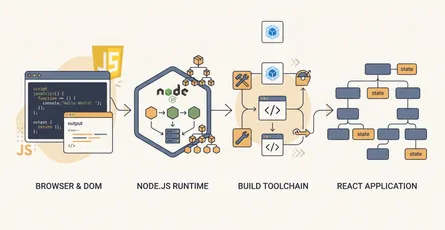
JavaScript Beginner to Expert
This roadmap guides you through the complete JavaScript journey from writing your first variable to architecting production-grade applications on the frontend and backend. Work through each stage sequ
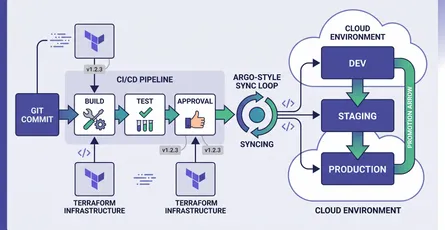
Release Engineer Beginner to Expert
This roadmap takes you from release engineering principles and version control mastery through to advanced GitOps patterns and multi-account AWS delivery at scale. Each stage builds on the last. Treat
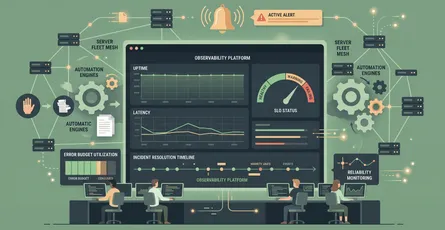
Site Reliability Engineer Beginner to Expert
This roadmap takes you from the fundamentals of Linux and systems thinking through to advanced observability, chaos engineering, and SRE organisational culture. Each stage builds on the last and ties
Solutions Architect Beginner to Expert
This roadmap guides you from cloud fundamentals through to professional-level AWS solutions architecture. Each stage builds on the last, so get the foundations solid before tackling advanced networkin
6 related posts