Full-Stack Developer Beginner to Expert
A roadmap for learning full-stack development, covering frontend, backend, databases, APIs, DevOps, and deploying complete production applications.
Full-Stack Developer Beginner to Expert
This roadmap walks you from your first web page to shipping and operating a complete production application. Work the stages in order. Build the frontend fundamentals, get fluent in JavaScript and TypeScript, then move server-side into APIs, databases, and authentication before finishing with the testing, containerization, deployment, and security skills that turn a demo into a real product. Treat required topics as your backbone, pick up recommended ones as you go, and revisit each stage as your projects grow.
How the Web Works
HTTP, HTTPS, and the Request Lifecycle
Methods, status codes, headers, and cookies, plus how TLS secures the round trip between client and server.
Client-Server Model and DNS
How a request travels from browser to server through DNS, load balancers, and reverse proxies, and where your code sits in that flow.
Browsers, Rendering, and Hosting
How browsers parse and render pages, and the basics of where and how web apps are hosted and served.
HTML, CSS, and Responsive Design
Semantic HTML
Structure content with meaningful elements so pages stay accessible, searchable, and easy to style.
CSS and Layout with Flexbox and Grid
The box model, selectors, and modern layout with Flexbox and Grid to arrange interfaces predictably.
Responsive Design
Media queries, fluid units, and a mobile-first approach so one layout adapts across screen sizes.
JavaScript and TypeScript
JavaScript Language Essentials
Variables, functions, closures, the event loop, promises, and async/await that power both client and server code.
The DOM and Browser APIs
Select and update elements, handle events, and use fetch so you understand what frameworks abstract away.
TypeScript
Static types, interfaces, and generics that catch bugs early and make code shared across the stack self-documenting.
Version Control and Tooling
Git and GitHub
Commits, branches, merges, and pull requests so every change is reviewable, reversible, and collaborative.
Package Managers and Build Tooling
Install and pin dependencies with npm or pnpm, and understand what a bundler like Vite does under the hood.
A Frontend Framework
React and Components
Build UIs from composable components with props and JSX, the foundation most full-stack stacks share.
Hooks and Component State
Manage local state and side effects with useState, useEffect, and custom hooks for reusable logic.
Forms and Validation
Controlled inputs, client-side validation, and clear error states so users can submit data confidently.
State Management and Data Fetching
Data Fetching and Server State
Load, cache, and revalidate remote data with a tool like TanStack Query instead of hand-rolling every fetch.
Client State Management
The Context API and lightweight stores like Zustand for state that many components need to share.
Server-Side Rendering and Meta-Frameworks
Next.js Fundamentals
File-based routing, server and client components, and data loading in a framework built for full-stack apps.
Rendering Strategies
Server-side rendering, static generation, and streaming, and when each keeps pages fast and fresh.
Server Actions and API Routes
Run backend logic close to your components with server actions and route handlers instead of a separate service.
Backend Runtime and Frameworks
Node.js and Express
Handle requests with Node.js and Express: routing, middleware, and request parsing for a working API.
Structured Backends with Nest
Organize larger services with NestJS modules, dependency injection, and a clear, testable architecture.
Configuration and Environments
Drive settings through environment variables and keep development, staging, and production cleanly separated.
Relational Databases and PostgreSQL
SQL and PostgreSQL
SELECT, JOIN, and aggregation to read and shape data, using PostgreSQL as a capable, open-source default.
Schema Design and Indexes
Model entities and relationships, normalize sensibly, and add indexes so common queries stay fast.
Transactions
Group related writes so concurrent operations stay correct under load instead of leaving half-finished data.
NoSQL and ORMs
NoSQL Data Stores
Document stores like MongoDB and key-value stores like Redis, and when their flexibility or speed earns a place.
ORMs and Query Builders
Map rows to typed objects with Prisma or Drizzle, while knowing when raw SQL is simply clearer.
Database Migrations
Version schema changes in code so every environment applies the same ordered, reversible steps.
Designing and Consuming APIs
RESTful API Design
Model resources, map CRUD to HTTP methods, return the right status codes, and paginate large collections.
GraphQL
Let clients request exactly the fields they need with a typed schema, and understand the N+1 problem it introduces.
Consuming APIs from the Frontend
Call your own and third-party APIs cleanly, handling loading, errors, and retries on the client.
Authentication and Authorization
Sessions and Tokens
Cookie-based sessions versus stateless JWTs, and the tradeoffs each makes for scale and revocation.
OAuth2 and Social Login
Delegate identity to providers and understand the authorization code flow behind sign-in with Google or GitHub.
Password Storage and Access Control
Hash credentials with bcrypt or argon2, and model permissions with roles so authorization scales past one admin flag.
Testing Across the Stack
Unit and Component Tests
Test business logic and UI components in isolation with Vitest and Testing Library for fast feedback.
Integration Tests
Exercise API routes against a real database to catch the wiring bugs unit tests never see.
End-to-End Tests
Drive the whole app in a browser with Playwright to verify critical user flows from click to database.
Git Workflows and CI/CD
Collaborative Git Workflows
Feature branches, code review, and a workflow like trunk-based or GitHub Flow that keeps a team unblocked.
CI/CD Pipelines
Automate build, test, and deploy with GitHub Actions so every merge reaches production the same repeatable way.
Containerization with Docker
Docker Fundamentals
Write Dockerfiles and build small images so your frontend and backend run identically across environments.
Docker Compose for Local Dev
Spin up your app, database, and cache together with Compose so a new machine is one command from running.
Cloud Deployment and Hosting
Deploying Frontends and Meta-Frameworks
Ship a Next.js app to a platform like Vercel, with previews, environment variables, and custom domains.
Deploying Backends and Databases
Run APIs on a container host or serverless platform and connect a managed database with pooled connections.
CDNs and Caching at the Edge
Use cache-control headers and a CDN to serve static and cacheable responses close to your users.
Monitoring, Logging, and Error Tracking
Structured Logging
Emit machine-parseable logs with correlation IDs so one request can be traced from frontend to database.
Error Tracking
Capture and group client and server exceptions with a tool like Sentry so real user errors surface fast.
Metrics and Uptime
Track latency, error rate, and uptime so you learn about problems before your users report them.
End-to-End Security
OWASP Top 10
Injection, broken access control, and the other common web vulnerabilities you must design against.
Input Validation and Sanitization
Validate and sanitize every input at the boundary to block injection, XSS, and malformed data.
Secrets and Transport Security
Keep keys out of source control, rotate them, and enforce HTTPS everywhere data is in transit.
Comments
Was this useful?
Continue on this topic
The same subject, covered a different way from the roadmap above.
 Quiz
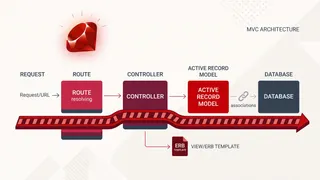
QuizRuby on Rails: Convention Over Configuration
Test your knowledge of Ruby on Rails: MVC, Active Record and associations, migrations, routing, controllers and callbacks, ERB views, and the conventions that make Rails productive.
 Code snippet
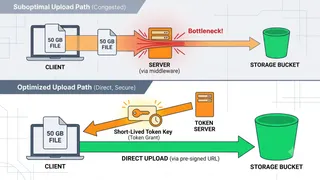
Upload Files to AWS S3 with Pre-Signed URLs in Node.js
A Node.js snippet for generating S3 pre-signed URLs so clients upload straight to S3 instead of through your server. Covers PUT URL generation, expiry, content-type and size enforcement, CORS, multipart for large files, and the IAM policy that keeps it scoped.
 Glossary
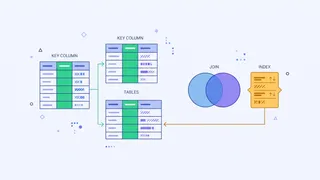
Databases & SQL
Foundational relational database and SQL terms: tables and keys, the join types, indexes and query plans, transactions and isolation levels, normalization, and the managed-service vocabulary you meet in the cloud.
 Case study
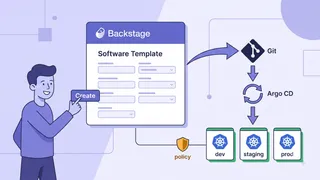
Building an Internal Developer Platform on Backstage and GitOps
How golden paths in Backstage, self-service software templates, and Argo CD let product teams create, build, and ship services without filing tickets to the platform team.
You might also enjoy
More posts on similar topics
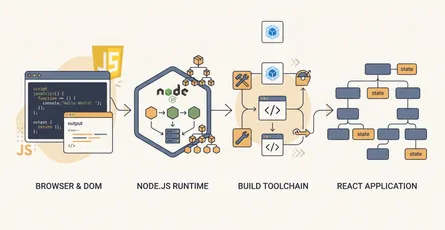
JavaScript Beginner to Expert
This roadmap guides you through the complete JavaScript journey from writing your first variable to architecting production-grade applications on the frontend and backend. Work through each stage sequ
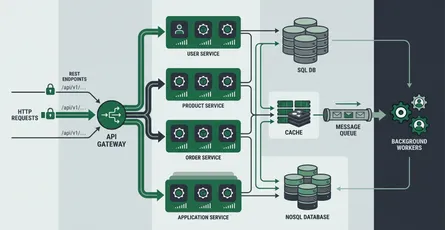
Backend Developer Beginner to Expert
Backend Developer Beginner to Expert This roadmap walks you from your first server-side program to designing scalable, secure systems. Work through the stages in order. Nail a language, the command
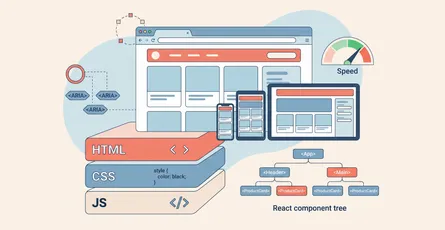
Frontend Developer Beginner to Expert
Frontend Developer Beginner to Expert This roadmap walks you from absolute beginner to a strong, hireable frontend engineer. Work through the stages in order. The early ones build the mental model
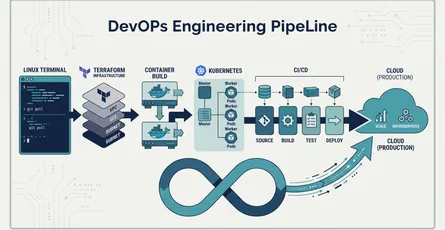
DevOps Engineer Beginner to Expert
This roadmap guides you from Linux fundamentals through to advanced platform engineering and MLOps. Each stage builds on the last, so work through them in sequence to build a well-rounded DevOps skill
Release Engineer Beginner to Expert
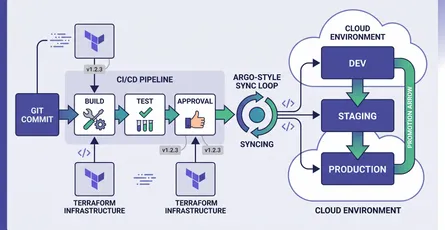
This roadmap takes you from release engineering principles and version control mastery through to advanced GitOps patterns and multi-account AWS delivery at scale. Each stage builds on the last. Treat
Site Reliability Engineer Beginner to Expert
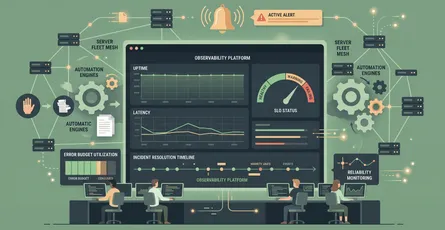
This roadmap takes you from the fundamentals of Linux and systems thinking through to advanced observability, chaos engineering, and SRE organisational culture. Each stage builds on the last and ties
6 related posts