Introduction
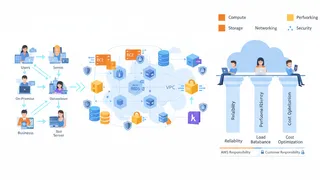
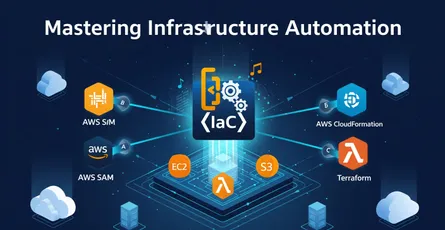
Infrastructure automation is core to running a cloud native AWS environment well. This post covers the best practices for security and compliance, CI/CD pipelines, monitoring and scaling, performance optimization, and cost management.
Security and compliance
Least privilege
Grant only the permissions each user, role, or service needs to do its job, and nothing more. This limits the damage a compromised credential can do.
Security policies
Implement strong security policies and identity and access management practices to protect your environment from unauthorized access and other threats.
Regular security audits
Conduct regular security audits to identify and fix vulnerabilities in your infrastructure. Review your security policies periodically to confirm they still match best practices and industry standards.
CI/CD pipelines
Continuous Integration
Use Continuous Integration (CI) to automate the integration of new code and configuration changes into your infrastructure. Tools like AWS CodePipeline and Jenkins can simplify the deployment process.
Continuous Deployment
Build on CI with Continuous Deployment (CD) practices. This automates deployment of changes across different environments.
Testing and quality assurance
Add automated tests, such as unit tests and integration tests, to check the reliability and stability of your infrastructure changes before deploying them.
Monitoring and scaling
Observability
Set up monitoring and logging to see the performance and health of your infrastructure. AWS CloudWatch, AWS X-Ray, and similar tools help you track and troubleshoot issues.
Auto Scaling
Use auto scaling to adjust the resources allocated to your applications based on demand, so your environment can handle traffic and workload spikes.
Performance optimization
Performance profiling
Profile your infrastructure to identify bottlenecks and areas for optimization. Tools like AWS CloudWatch and AWS Trusted Advisor gather performance data to inform optimization decisions.
Caching and content delivery
Use caching and content delivery services like Amazon CloudFront and AWS ElastiCache to improve application performance and give users faster response times.
Cost management and optimization
Cost allocation
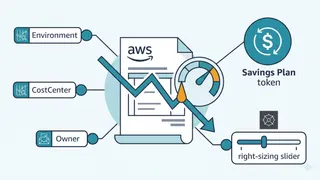
Use resource tagging to allocate costs accurately and see how your resources are actually used. This makes it easier to spot cost-saving opportunities and manage your budget.
Reserved Instances and Savings Plans
Use AWS Reserved Instances and Savings Plans to reduce infrastructure costs by committing to long-term usage in exchange for meaningful discounts.
Ongoing cost optimization
Regularly review your infrastructure for unused or underutilized resources and decommission them. Keep optimizing your infrastructure for cost efficiency without sacrificing performance.
Conclusion
Applying these practices to security and compliance, CI/CD pipelines, monitoring and scaling, and performance and cost optimization will make your cloud native AWS environment more efficient, reliable, and scalable.
References
- AWS Well-Architected Framework, https://aws.amazon.com/architecture/well-architected/
- Infrastructure as Code on AWS, https://aws.amazon.com/what-is/iac/
- AWS Security Best Practices Whitepaper, https://docs.aws.amazon.com/whitepapers/latest/aws-security-best-practices/aws-security-best-practices.html
- Practicing Continuous Integration and Continuous Delivery on AWS, https://aws.amazon.com/devops/continuous-integration/ & https://aws.amazon.com/devops/continuous-delivery/
- AWS CodePipeline User Guide, https://docs.aws.amazon.com/codepipeline/latest/userguide/welcome.html
- Amazon CloudWatch User Guide, https://docs.aws.amazon.com/AmazonCloudWatch/latest/monitoring/WhatIsCloudWatch.html
- AWS Auto Scaling User Guide, https://docs.aws.amazon.com/autoscaling/latest/userguide/Welcome.html
- AWS Cost Management, https://aws.amazon.com/aws-cost-management/
- AWS Identity and Access Management (IAM) Best Practices, https://docs.aws.amazon.com/IAM/latest/UserGuide/best-practices.html
- Amazon CloudFront Developer Guide, https://docs.aws.amazon.com/AmazonCloudFront/latest/DeveloperGuide/Introduction.html
- Amazon ElastiCache User Guide, https://docs.aws.amazon.com/AmazonElastiCache/latest/UserGuide/WhatIs.html
- AWS Trusted Advisor, https://aws.amazon.com/premiumsupport/technology/trusted-advisor/
- AWS X-Ray Developer Guide, https://docs.aws.amazon.com/xray/latest/devguide/aws-xray.html