Introduction
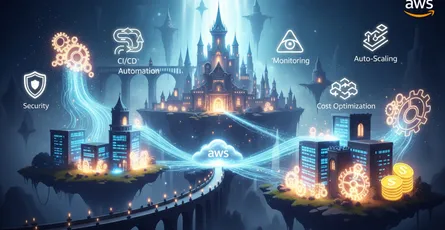
Cloud native infrastructure lets developers design and deploy applications built specifically for the cloud, rather than adapted to it. Using AWS services well, it enables applications that are highly scalable, resilient, and efficient.
The essence of cloud native infrastructure
Cloud native infrastructure is a mindset and approach built around the unique characteristics and capabilities of the cloud. It goes beyond simply lifting and shifting applications to the cloud, and gets into the details of using cloud services to their fullest extent. Done well, it lets applications scale, self-heal, and adapt to changing demands with minimal manual intervention.
AWS services for cloud native applications
AWS Lambda
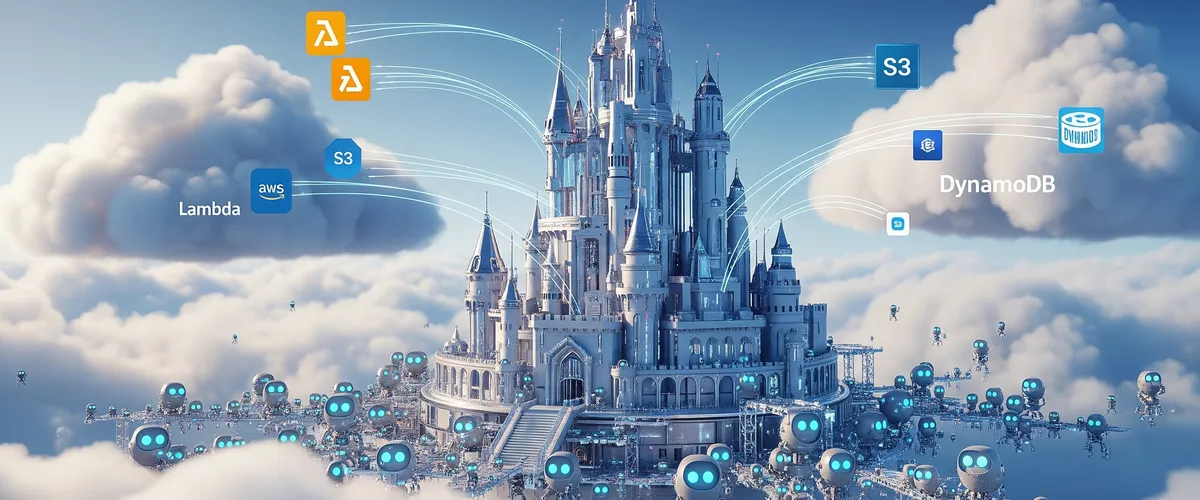
AWS Lambda is a core piece of cloud native infrastructure. It lets you run code without provisioning or managing servers, so you can focus on application logic while the service handles scaling and availability.
Amazon DynamoDB
DynamoDB is a fully managed NoSQL database service offering high scalability, low latency, and replication across multiple regions. It lets you store and retrieve data reliably, which matters for the resilience of cloud-native applications.
Amazon S3
Amazon S3 provides scalable object storage with high durability and availability. It’s a common choice for storing and retrieving data, media files, backups, and more, and is a building block of many cloud-native architectures.
Architectural considerations for cloud native AWS environments
Microservices and serverless architecture
Cloud native infrastructure pushes you toward microservices and serverless architecture patterns. Breaking down applications into smaller, independent services allows for better scalability, fault isolation, and independent deployment. Serverless components also improve the agility and efficiency of the architecture by eliminating the need for server management.
Resilience and fault tolerance
Cloud native infrastructure promotes building applications that are resilient to failures. Using AWS services like Elastic Load Balancing, Auto Scaling, and Amazon Route 53, you get high availability, fault tolerance, and traffic distribution across multiple regions and availability zones.
Observability and monitoring
In a cloud native AWS environment, observability matters for maintaining the health and performance of applications. AWS services like Amazon CloudWatch, AWS X-Ray, and AWS CloudTrail provide monitoring and logging capabilities that give you visibility into the behavior of your applications and infrastructure.
Cloud native infrastructure and Infrastructure as Code (IaC)
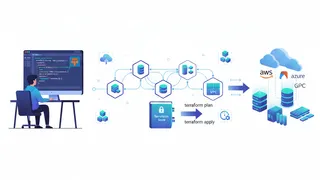
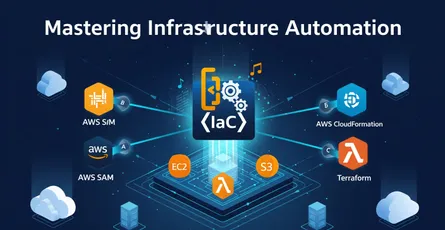
Cloud native infrastructure pairs well with Infrastructure as Code (IaC) principles. By treating infrastructure as code, you can provision, configure, and manage your cloud resources in a repeatable, consistent, and automated manner. Tools like AWS CloudFormation, AWS SAM, and Terraform let you define your infrastructure as code, which simplifies deployment, maintenance, and scaling.
Conclusion
Cloud native infrastructure on AWS changes how applications get designed and deployed. Using the unique capabilities of AWS services, developers can build applications that are scalable, resilient, and cost-effective, whether that’s serverless compute with AWS Lambda or storage with Amazon DynamoDB and Amazon S3.
References
- What is Cloud Native? - AWS, https://aws.amazon.com/what-is/cloud-native/
- Cloud Native Computing Foundation (CNCF) - Definition, https://github.com/cncf/toc/blob/main/DEFINITION.md
- AWS Lambda Developer Guide, https://docs.aws.amazon.com/lambda/latest/dg/welcome.html
- Amazon DynamoDB Developer Guide, https://docs.aws.amazon.com/amazondynamodb/latest/developerguide/Introduction.html
- Amazon S3 User Guide, https://docs.aws.amazon.com/AmazonS3/latest/userguide/Welcome.html
- Microservices on AWS, https://aws.amazon.com/microservices/
- Serverless on AWS, https://aws.amazon.com/serverless/
- AWS Well-Architected Framework, https://aws.amazon.com/architecture/well-architected/
- Infrastructure as Code on AWS, https://aws.amazon.com/what-is/iac/
- AWS CloudFormation User Guide, https://docs.aws.amazon.com/AWSCloudFormation/latest/UserGuide/Welcome.html
- Terraform on AWS, https://developer.hashicorp.com/terraform/tutorials/aws-get-started
- Amazon CloudWatch User Guide (Observability.), https://docs.aws.amazon.com/AmazonCloudWatch/latest/monitoring/WhatIsCloudWatch.html
- AWS X-Ray Developer Guide (Observability.), https://docs.aws.amazon.com/xray/latest/devguide/aws-xray.html
- Elastic Load Balancing User Guide (Resilience.), https://docs.aws.amazon.com/elasticloadbalancing/latest/userguide/what-is-load-balancing.html
- Amazon EC2 Auto Scaling User Guide (Resilience/Scalability.), https://docs.aws.amazon.com/autoscaling/ec2/userguide/what-is-amazon-ec2-auto-scaling.html