Kubernetes Advanced: Production Operations & Scaling
Kubernetes Advanced: Production Operations & Scaling
Up to 20 questions, shuffled on every run
Welcome to the Kubernetes Advanced Quiz! This quiz is designed to test your knowledge of Kubernetes concepts related to production operations and scaling. Each question will challenge your understanding of key Kubernetes features and best practices for running applications at scale. Good luck!
Answer key and explanations20 questions
The quiz above draws 20 questions at random from these 30, so a second attempt will not be the same run. Everything in the pool is listed here.
What is a StatefulSet?
AnswerA controller for applications requiring stable network IDs and persistent storage
What is a PersistentVolume (PV)?
AnswerA cluster-level storage resource provisioned by an administrator or provisioner
What is a PersistentVolumeClaim (PVC)?
AnswerA request for storage by a user that consumes specific PersistentVolume resources
What is a StorageClass?
AnswerAn object that enables dynamic provisioning of volumes based on defined profiles
What is a Service in Kubernetes?
AnswerAn abstraction that defines a logical set of pods and a policy to access them
What is Ingress?
AnswerAn API object that manages external access to services, typically HTTP/HTTPS
What is a ConfigMap?
AnswerAn API object used to store non-confidential data in key-value pairs
What is a Secret?
AnswerAn object for storing sensitive information like passwords or API tokens
What is RBAC (Role-Based Access Control)?
AnswerA method for regulating access to the Kubernetes API based on individual roles
What is a NetworkPolicy?
AnswerA specification of how groups of pods are allowed to communicate with each other
What is a Pod Disruption Budget (PDB)?
AnswerA limit on the number of pods that can be down simultaneously during voluntary disruptions
What is Horizontal Pod Autoscaler (HPA)?
AnswerA system that automatically scales the number of pod replicas based on metrics
What is Vertical Pod Autoscaler (VPA)?
AnswerA system that automatically sets resource requests and limits based on actual usage
What is a DaemonSet in Kubernetes?
AnswerA controller ensuring that all (or some) nodes run a copy of a specific pod
What are Jobs and CronJobs in Kubernetes?
AnswerResources for running tasks to completion, either once or on a recurring schedule
What is ResourceQuota in Kubernetes?
AnswerA constraint that limits aggregate resource consumption per namespace
What is LimitRange in Kubernetes?
AnswerA policy to constrain resource allocations (limits/requests) for pods in a namespace
What are Taints and Tolerations?
AnswerA mechanism allowing nodes to repel pods unless the pods have a matching toleration
What is Node Affinity in Kubernetes?
AnswerA set of rules used by the scheduler to define which nodes a pod can be placed on
What is Pod Affinity in Kubernetes?
AnswerA rule that allows pods to be scheduled based on the labels of pods already on a node
What are QoS (Quality of Service) classes in Kubernetes?
AnswerA classification (Guaranteed, Burstable, BestEffort) that determines eviction priority
What is SecurityContext in Kubernetes?
AnswerA set of privilege and access control settings for a pod or container
What is Pod Security Standards (PSS)?
AnswerA set of predefined security profiles (Privileged, Baseline, Restricted) applied to namespaces
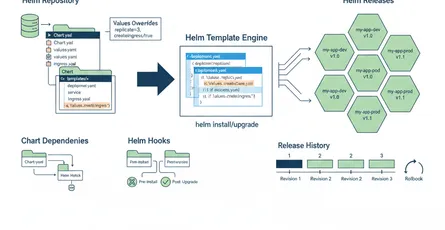
What is Helm in Kubernetes?
AnswerA package manager that automates the creation and management of Kubernetes applications
What are Custom Resource Definitions (CRDs)?
AnswerA resource that allows users to add their own custom objects to the Kubernetes API
What is a Kubernetes Operator?
AnswerA method of packaging and managing applications using the Kubernetes API and custom controllers
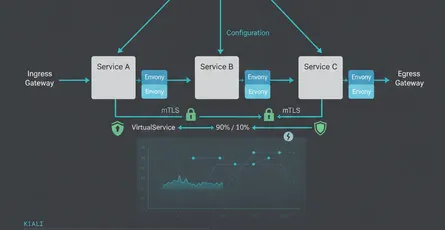
What is a Service Mesh?
AnswerA dedicated infrastructure layer for managing service-to-service communication
What is etcd in Kubernetes?
AnswerA distributed key-value store used as the backing store for all cluster data
What is the Kubernetes API versioning strategy?
AnswerA system of Stability Levels (Alpha, Beta, Stable) to manage feature maturity
What is Cluster Autoscaling vs HPA?
AnswerCluster Autoscaling manages node count, while HPA manages pod replica count