Istio: Service Mesh Fundamentals
Istio: Service Mesh Fundamentals
Up to 20 questions, shuffled on every run
Welcome to the Istio Basics Quiz! Istio is often the “final boss” of Kubernetes infrastructure. It adds traffic control and security that production-grade microservices depend on. This quiz will test your knowledge of how traffic flows through the mesh, how security is enforced, and how to get visibility into your system. Good luck!
Answer key and explanations20 questions
The quiz above draws 20 questions at random from these 30, so a second attempt will not be the same run. Everything in the pool is listed here.
What is the primary purpose of a "Service Mesh" like Istio?
AnswerTo manage, secure, and observe service-to-service communication
Which proxy is used by Istio as its "Sidecar"?
AnswerEnvoy Proxy
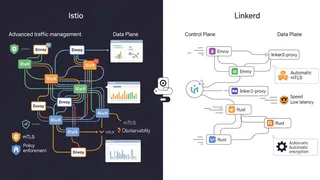
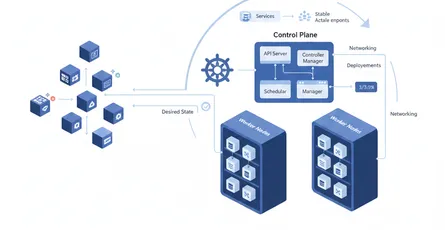
What is the difference between the "Data Plane" and "Control Plane" in Istio?
AnswerThe Data Plane handles traffic; the Control Plane manages configuration
What is "Canary Deployment" in the context of Istio?
AnswerGradually shifting traffic to a new version to validate stability
What does "mTLS" (mutual TLS) provide in Istio?
AnswerMutual authentication and encryption between communicating services
What is a "VirtualService" in Istio?
AnswerA set of traffic routing rules applied when a host is addressed
What is a "DestinationRule" used for?
AnswerTo define policies like load balancing and circuit breaking for a service
What is "Circuit Breaking" in Istio?
AnswerAutomatically failing requests to a service to prevent a cascade
What is an "Istio Gateway"?
AnswerA load balancer describing an edge for ingress or egress traffic
What is "Fault Injection" in Istio?
AnswerDeliberately introducing delays or errors to test system resilience
What is "Sidecar Injection"?
AnswerAdding the Envoy proxy container to an application Pod
What is "Istiod"?
AnswerA centralized daemon providing discovery, config, and certificates
What is the responsibility of the "Pilot" component?
AnswerConverting high-level routing rules into Envoy configurations
What is "Mirroring" (Traffic Shadowing) in Istio?
AnswerSending a copy of live traffic to a test service without impact
What is "Kiali"?
AnswerA management console for mesh observability and topology
What is a "ServiceEntry" used for?
AnswerTo add external service entries to the Istio internal registry
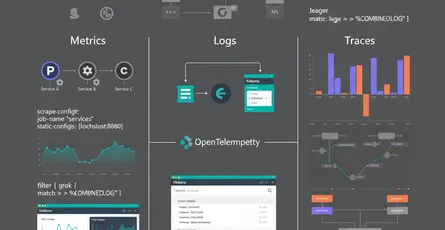
What is "Observability" in the context of Istio?
AnswerGaining insights via distributed metrics, logs, and traces
What is "Request Retries" in Istio?
AnswerAutomatically re-attempting a failed request to a service
What is "Traffic Shifting"?
AnswerThe gradual migration of traffic from one version to another
What is an "AuthorizationPolicy"?
AnswerAn access control resource defining who can access a service
What is "L7" (Layer 7) in the context of Istio?
AnswerThe Application Layer, enabling features like HTTP routing
What is "Egress Traffic"?
AnswerNetwork traffic originating from inside the mesh to the outside
What does "Strict Mode" mean for mTLS?
AnswerEnforcing encrypted mTLS traffic and rejecting plain text
What is a "Subset" in an Istio DestinationRule?
AnswerA named group of service instances, often representing a version
What is "Locality Load Balancing"?
AnswerRouting traffic to the geographically nearest service instance
What is "Distributed Tracing" in Istio?
AnswerTracking the path of a request through multiple services
What is an "Ingress Gateway"?
AnswerThe primary entry point for traffic coming from outside the mesh
What is the "Envoy Filter" resource?
AnswerA resource for customizing the underlying Envoy configuration
What is "Istio Operator"?
AnswerA Kubernetes controller that manages the Istio lifecycle
Why is Istio considered "Zero Trust" security?
AnswerIt assumes the network is compromised and verifies every request